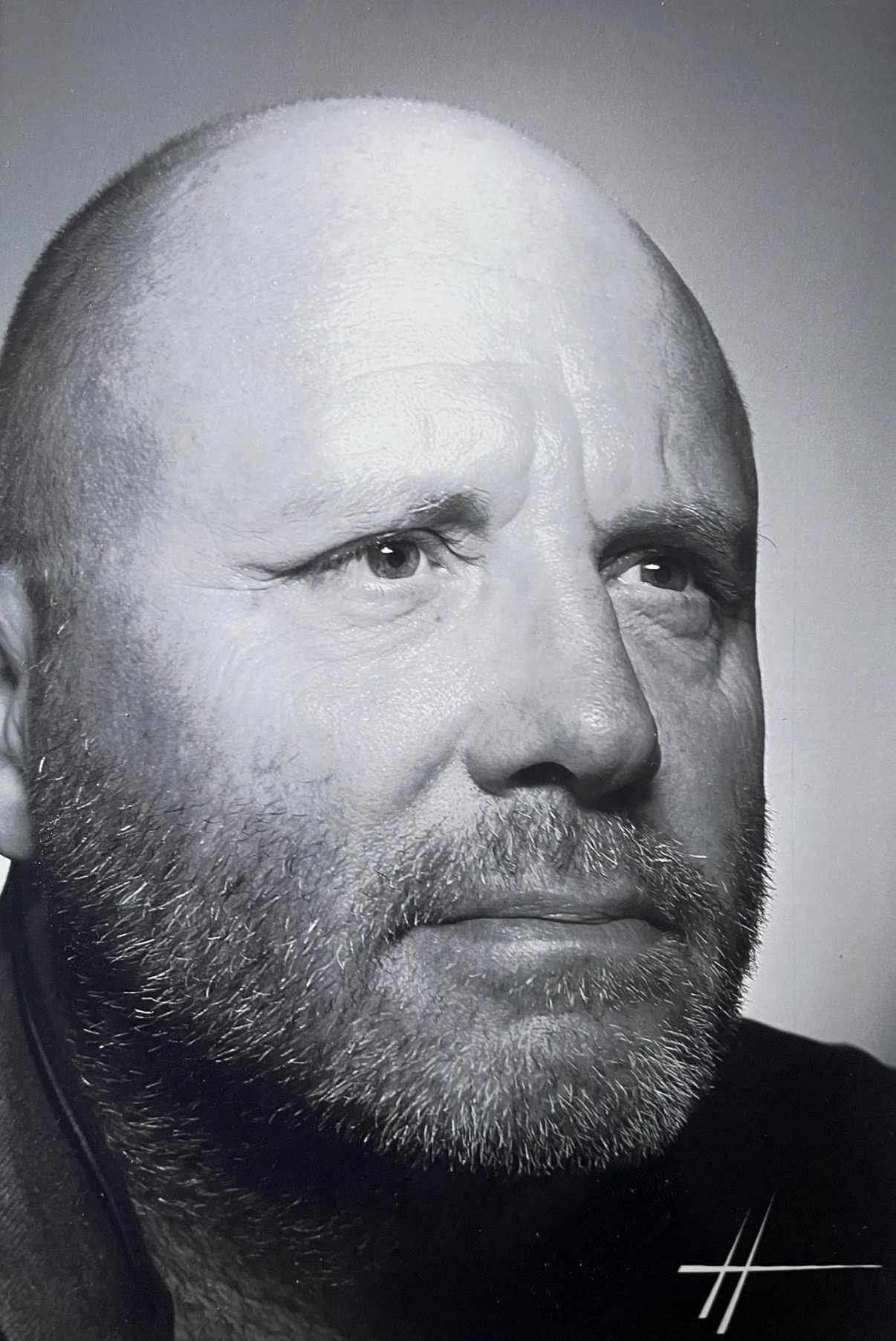
Eric Peters was born in 1964 and lived in the capital until the age of 20. He built a first career in finance and banking over 20 years, then a second from 2002 as a company director, founding and leading SOLUTYS Group, a leader in the field of industrial traceability. He has chosen to devote his third career to the preservation of heritage in all its forms, with the central aim of helping to make culture accessible to the greatest number.
The encounter with Briord
It was in 2021 that Eric Peters discovered the Land of Briord. The estate, then, bore the marks of time: worn buildings, a ruined chapel, a vanished kitchen garden, a scattered memory.
For him, it was not a matter of buying an old dwelling. It was a matter of answering a call. Briord became a cause: heritage, cultural, human.
Restore, preserve, share
Three words form the mantra that guides Eric in his mission at Briord: Restore, Preserve, Share
Restore the estate to its history, by repairing what oblivion had damaged
Preserve what can be preserved: the walls, the forest, the chapel, but also the stories and the names
Share, finally, for a heritage kept closed dies, and has meaning only if all can have access to it
From February 2022, the estate opened to the public, free of charge, at least once a month on the occasion of Grand Visits guided by a group of volunteers whom Eric named the Volontaires de Charette (Charette's Volunteers), in reference to those who formed the great army of the illustrious François-Athanase Charette de La Contrie, cousin of Joseph Charette de Briord, builder of the château of the same name.
The Volontaires de Charette
One does not raise up such a place alone. Around Briord gathers a community of volunteers — the Volontaires de Charette — engaged in the works, the visits, the welcoming of the public and the transmission of history.
With them, it is no longer only stones that are restored, but a memory that is set back on its feet.
By Eric's own admission, his Volontaires de Charette, his friends, carry him and give him the energy to pursue the Briord mission. They are the present and the future of the project; they are aged from 9 to 90; they are children, women and men who, through their commitment, offer to all the possibility, as they do, of "Living Briord".
The great projects
Under the direction of a heritage architect and craftsmen specialising in the restoration of historic monuments, the projects follow one another: the eighteenth-century chapel fallen into ruin, the dovecote, the great conservatory kitchen-garden and orchard restored from a plan of 1907, the north tower and its campanile, and so many other projects to come, with one central aim:
To restore to Briord its centuries-old rank and establish it definitively as "the terrestrial lighthouse of the Pays de Retz".
The endowment fund
In order to guarantee the continuity of the project beyond his own will alone, Eric Peters created the Eric Peters Fund for the Preservation of Heritage. This non-profit structure gives the estate the means to carry its restoration and its opening to the public over the long term.
A living heritage
Eight centuries after Séris de Rezay, the chain is not broken.
Eric Peters is convinced that generations of "missionaries" will continue after him, guided by the same ambition:
To make of Briord a heritage accessible to all, without condition of means.