On the far side of the main avenue, facing the chapel, the chaplain's house at Briord stands on the site of an oratory raised in the early eighteenth century under Bishop de Sanzay. Under Joseph Charette its recorded occupant was Abbé Jean Bouchard, a non-juring priest and private chaplain to the château, who perished in the mass drowning of 16 November 1793 at Nantes. The building has accompanied every generation of owners, from the L'Espinay to Jean-Baptiste Étienne, and forms with the chapel opposite a small architectural whole that cannot be separated.
A building set face to face
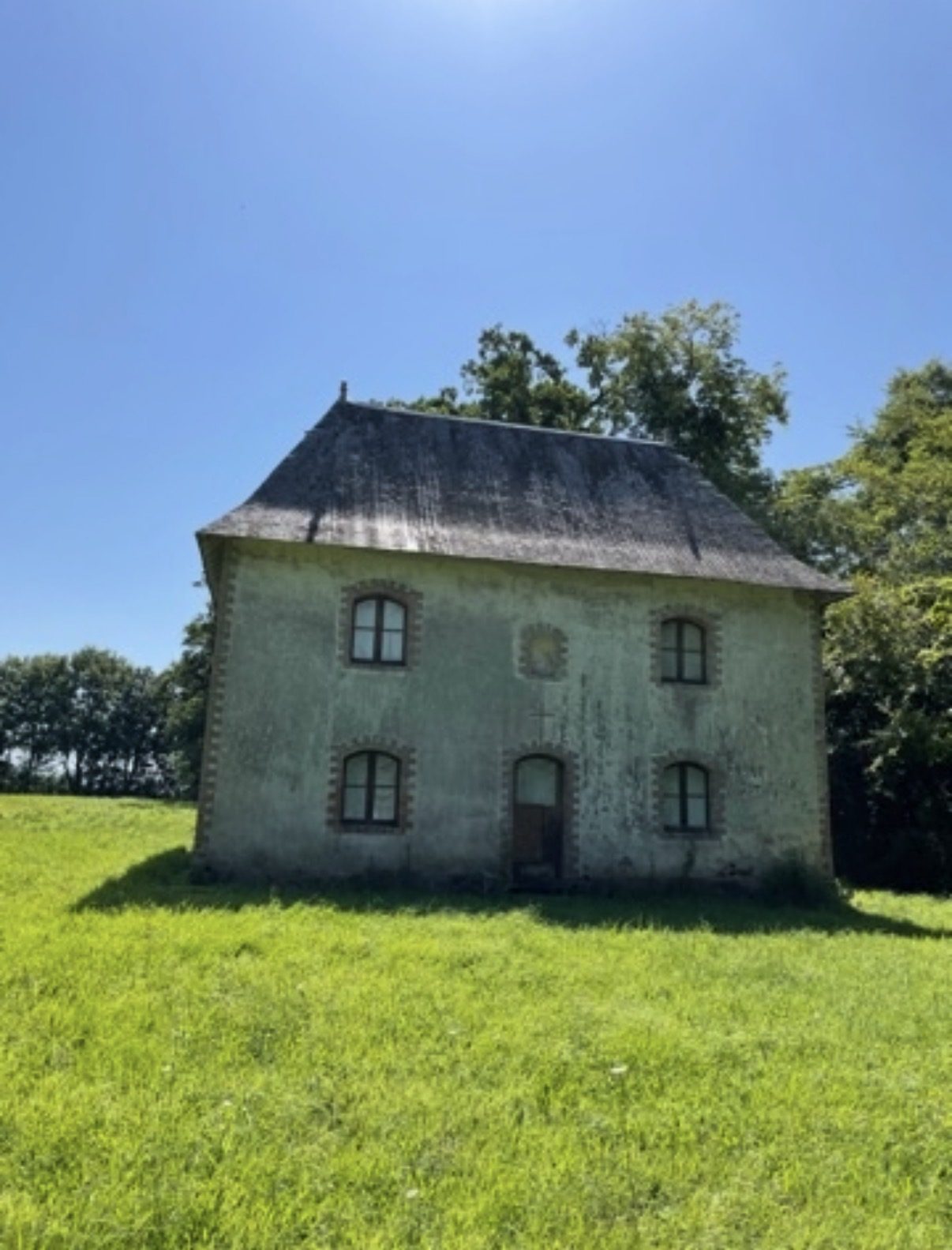
On the far side of the main avenue leading to the château de Briord, directly facing the chapel, stands a modest building known today as the chaplain's house. This face-to-face arrangement — chapel on one side of the avenue, chaplain's house on the other — is one of the architectural particularities of the estate. It dates in the main from the early eighteenth century, when an oratory was raised on this spot under Bishop de Sanzay of Nantes. The present building occupies, if it does not indeed take up, that founding site. For more than two centuries it received the clergy passing through Briord — chaplains, almoners, visiting priests — and formed, with the chapel opposite, the small devotional ensemble that completed the seigneurial apparatus of the estate. In that century of the Enlightenment, and on Charette land, Jean Bouchard, chaplain of Briord, also gave alms to the poorest of the village.
Bishop de Sanzay and the oratory
Lavalette de Sanzay was Bishop of Nantes in the early eighteenth century. Under his episcopate an oratory was developed at Briord on the site of the present chaplain's house. It is possible that in some still earlier form a place of prayer stood here, as very old engravings appear to suggest. An oratory, in the strict sense of canon law under the Ancien Régime, was a private place of prayer set up in or near a house and authorised by episcopal permission: a form midway between the public chapel and the domestic space, reserved for the family and its guests. Mass was said there, prayers were offered, and communion received on the great feast days.
The raising of an oratory at Briord therefore reflected the standing of the L'Espinay, and later the Charette, within the parish of Port-Saint-Père. At that date the L'Espinay family still held the estate — it had come to them in 1585 through the marriage of Suzanne des Rouxières to Samuel de L'Espinay — and, having been Huguenot in the seventeenth century (the names Isaac, Samuel, Jacob, Abigaïl, Judith and Isaïe bear witness to it), had abjured at the revocation of the Edict of Nantes in 1685. The oratory consecrated under Bishop de Sanzay marks precisely that return to the official Catholic fold: it was a public sign of religious normality regained.
The medieval manor and the life of worship
Before the oratory, the religious organisation of the estate rested on two structures: the little chapel of the medieval court (still mentioned in 1793, though without precise location) and the chaplaincy of the park dedicated to Saint James. As early as 1688 a "chamber of the religious" existed on the upper floor of Pierre Landais's manor; in 1747 the "priest's chamber" is mentioned, occupied by the chaplain who also served as tutor to the Charette children. The archives show an old and settled ecclesiastical presence within the house — a presence that an oratory outside would complete, probably to allow a wider and better regulated worship.
The chaplain's house in the time of Joseph Charette
Joseph Charette de Briord had the château rebuilt from 1770 — the work most likely entrusted to the architect Jean-Baptiste Ceineray, though no document formally confirms it. The face-to-face arrangement of chapel and chaplain's house, a little later in date, took shape when he had the chapel built — probably at the same time, though this remains unconfirmed at the present state of research — and had the modest long-standing oratory turned into the chaplain's house we know today. Both the chaplain's house and the chapel would be enlarged nearly a century later by Count Pelet de Lautrec. Beyond the court leading to the gateway with its carved piers, crowned by the celebrated wrought-iron gate flanked by a lion and a greyhound, the religious ensemble thus found the place it occupies to this day.
Under Joseph Charette, religious life at the château was intense. His daughter Louise Anne Françoise, married in 1766 to Pierre François du Cambout de Coislin, emigrated abroad after 1789. Joseph Charette himself remained at Briord with his private chaplain, Abbé Jean Bouchard, a non-juring priest. The chaplain's house then served this refractory clergy, loyal to the family. It was, in effect, a small island of religious counter-revolution in a parish gradually caught up in political ferment. Fortineau, the constitutional parish priest, would in the end denounce to the republican administration the coming to Briord of an Irish priest who had refused the oath, and the celebration of a mass held to be public before 1,200 people on 25 February 1792.
Abbé Bouchard was arrested at the same time as his protector. He never returned to the chaplain's house at Briord: he was among the victims of the mass drowning of 16 November 1793 at Nantes, under the representative on mission Jean-Baptiste Carrier. With him vanished the private chaplain whose name is written for good into the religious memory of the estate.
A quiet passage through the nineteenth century
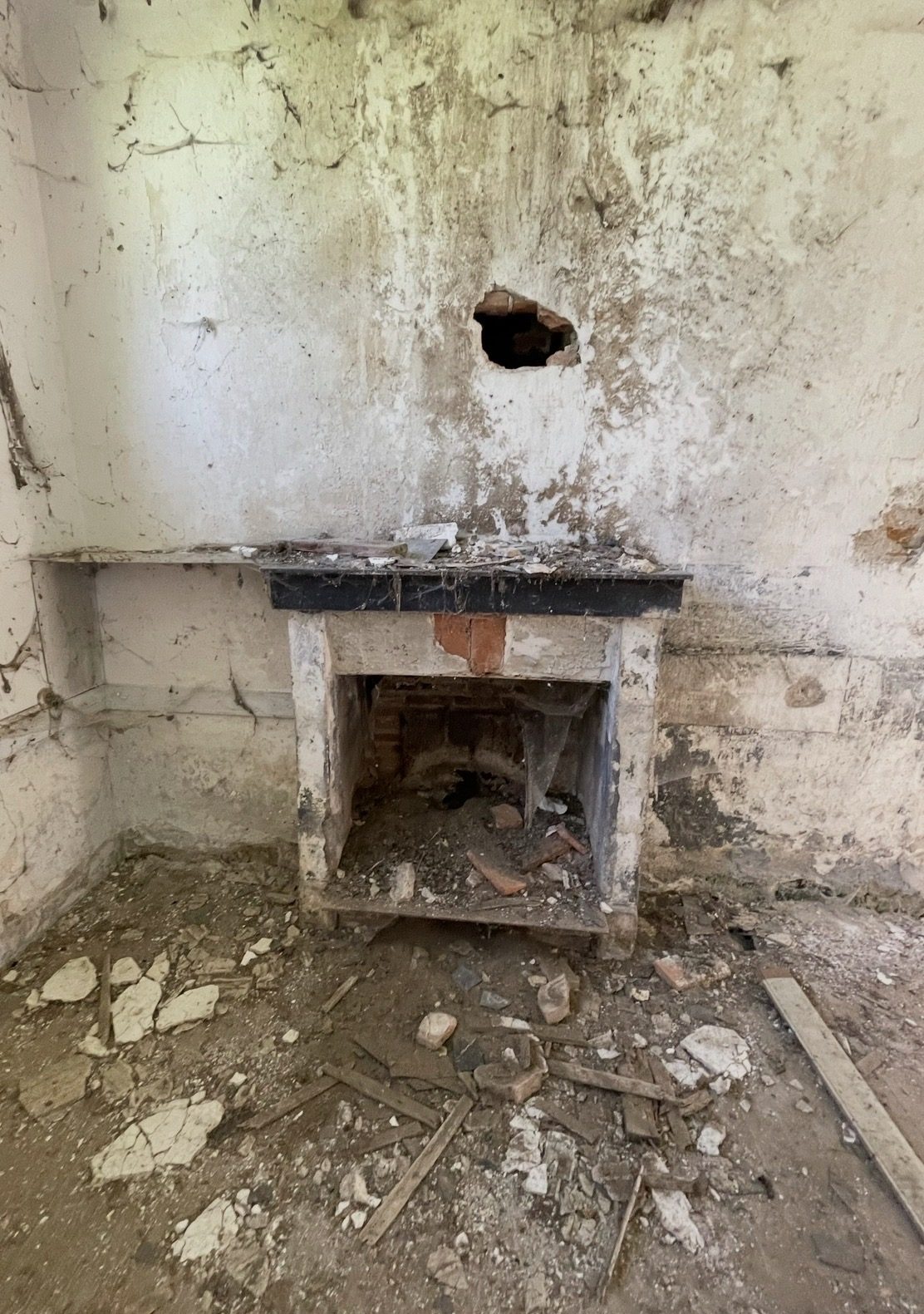
Under sequestration (1793–1798), under the Duboisviolette (1800–1833) and under the Pantin de La Guère (1833–1850), the chaplain's house remained standing but saw nothing of note. The Duboisviolette were merchants turned towards the wider world — the voyages of the Fils de France to Canton — not founders of religious houses. Their alliances were mixed: Jean-Anne Duboisviolette was brother-in-law to the Danish consul Joachim Möller, himself brother-in-law, through his daughter Frédérique, to Thomas Dobrée. Within this web of Franco-Nordic alliances, Catholic practice at the château continued without display. The chaplain's house probably served on the great occasions — baptisms, marriages, funerals — to receive clergy come from Port-Saint-Père or elsewhere.
The Pantin de La Guère, who acquired Briord on 4 November 1833, did not live permanently at the château. Over those seventeen years the chaplain's house was used only intermittently.
Pelet de Lautrec and the mystical age
It was again with Michel-Adolphe Pelet de Lautrec, son-in-law of the Pantin de La Guère, who came to Briord in 1850 through his marriage to Mathilde, that the chaplain's house knew its second age of intensity. A fervent Catholic, defender of King Francis II of Naples at the siege of Gaeta (1860–1861), and received by Pius IX, who gave him relics, Pelet de Lautrec in 1853 consecrated the chapel facing the chaplain's house to Saint Germain and to the Virgin. It is likely — though the sources examined do not state it explicitly — that the chaplain's house then served to lodge the churchmen who came to the château for services and feast days. It became once more a working part of the religious life of the estate.
It was also in this period that the Théotiste Covarel affair unfolded. From 1877 the Savoyard visionary — installed at the château at the urging of Abbé Cloquet — claimed to see the Virgin in the countess's bedchamber. Abbé Cloquet, formerly vicar general to the contested Bishop Vibert of Maurienne, was regularly present at Briord. One cannot help imagining that at certain moments he used the chaplain's house as a place of prayer, of meeting, or of listening to those close to the visionary. But no document among the archives examined preserves the detail.
The Voruz-Étienne years
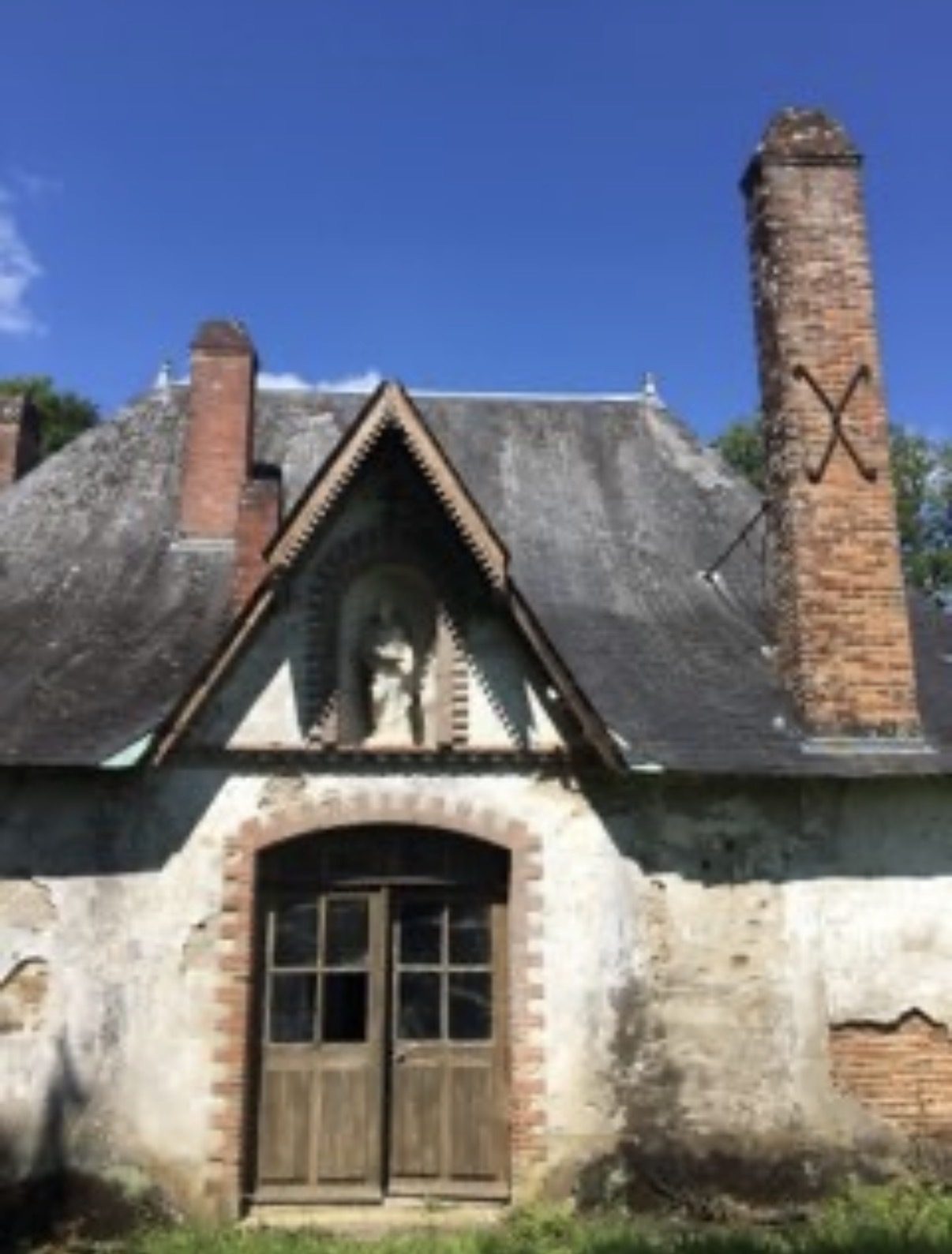
After the sale of 25 November 1885 to Jean-Simon Voruz on behalf of his under-age grandson Jean-Baptiste Étienne, the arrangement changed. Voruz was a Protestant, an active member of the Nantes consistory since 1847; his wife Eudoxie Thibaud, his daughter Berthe and his son Fernand shared that confession. Young Jean-Baptiste Étienne, who lost his mother in 1871 and his father in 1873, had been raised in his mother's Catholic faith. The religious balance of the estate became a mixed one: a Catholic owner, a mainly Protestant Voruz family, and servants who were largely Catholic.
In this context the chaplain's house lost its character as a regular clerical residence. It served as a stand-by for the estate's rare religious ceremonies — the hunt's Saint Hubert masses, family services — but never again as a dwelling. Jean-Baptiste Étienne, much taken up with hunting — the Équipage de Briord was founded in 1892 — and with the management of his various properties (La Prairie-d'Amont at Nantes, Aigrefeuille, Pornic, La Bernerie, the château du Vigeant in the Vienne), lived chiefly at Nantes in the rue Linné and stayed at Briord in spells that grew ever further apart until his death.
During the Second World War the château was occupied for a time by German troops. The chaplain's house, a mere outbuilding, passed through those years without itself being taken over. When Jean-Baptiste Étienne died at Nantes, in the rue Linné, on 22 October 1949, the religious building of Briord still stood, in its original face-to-face arrangement with the chapel.
A small and indivisible whole
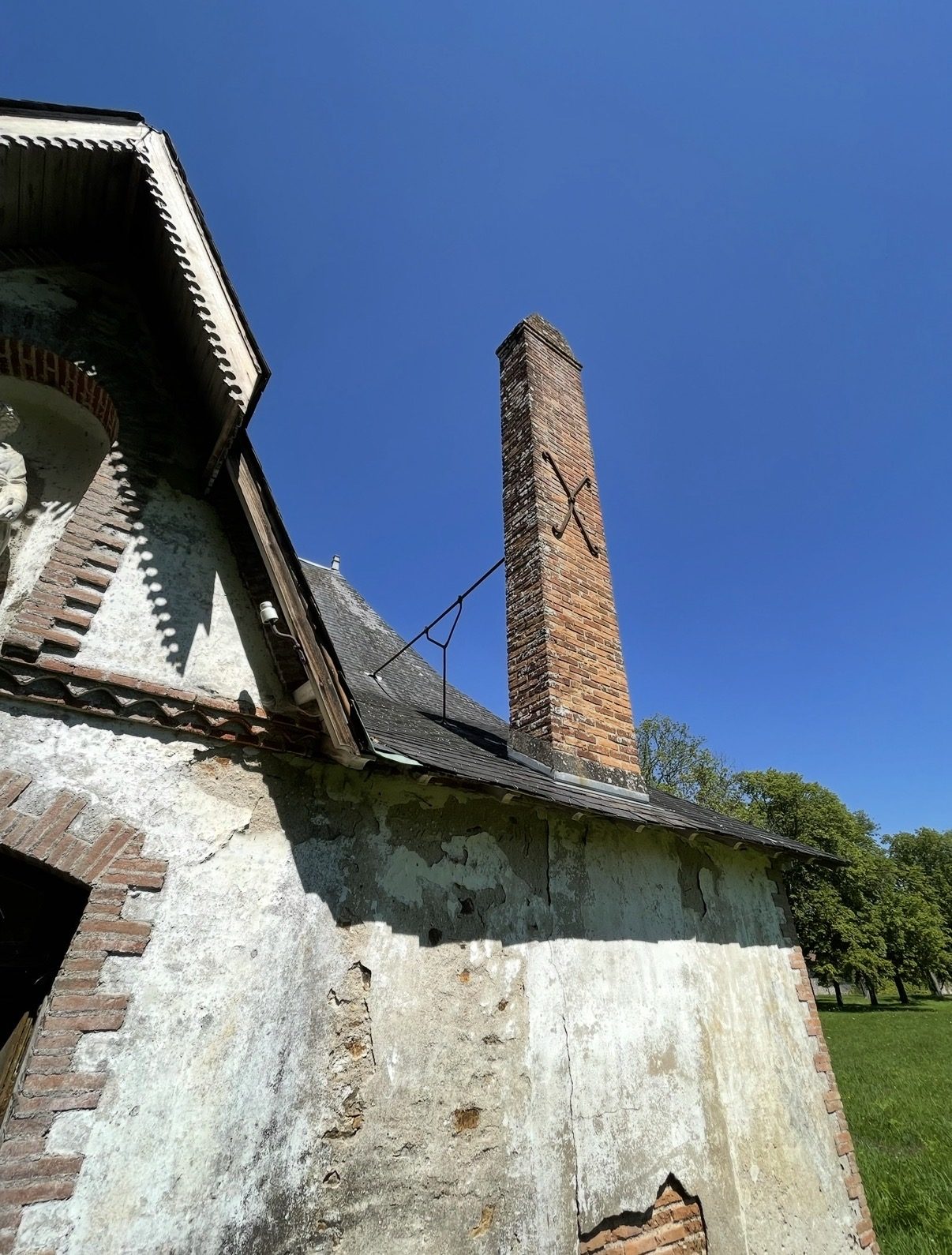
The chaplain's house at Briord is by nature a modest building. It has neither the prominence of the château with its lantern-topped dome, nor the liturgical dignity of the chapel. But it belongs to an architectural pair that the centuries have made inseparable. Chapel and chaplain's house, facing one another across the main avenue, form a functional unity: the one for worship, the other for receiving the clergy or the humblest inhabitants of the village. They derive from an old arrangement — probably older even than Bishop de Sanzay's oratory, if one considers the medieval tradition of the Charette chaplaincy — and they have accompanied every generation of the estate, from the L'Espinay to the Étienne.
The memory of Abbé Jean Bouchard, the last private chaplain recorded in the Nantes archives under Joseph Charette, clings particularly to this place. That non-juring priest, who chose to stay beside his master rather than emigrate, and who paid for that loyalty with his life in the drownings of November 1793, embodies the bond the chaplaincy of Briord kept with its private clergy. The chaplain's house is, in a sense, his last documented dwelling on earth.
The chapel's stained glass — the chapel itself being under restoration in 2026 and 2027 — will pay vivid tribute to this man of faith.
Sources consulted
Departmental Archives of Loire-Atlantique: the Briord chartulary (E 351–375); feudal declarations of Briord (B 1853); inventories of 1688 and 1747; 1 Q 149 (sale of Briord, 1798); 1 Q 505 (inventory of furnishings); series L (revolutionary administration, proceedings against Charette de Briord and his chaplain). Diocesan Archives of Nantes (7 FB 25): parish registers of Port-Saint-Père. For the episcopate of Bishop de Sanzay: Historical Archives of the diocese of Nantes. For the Nantes drownings and the death of Abbé Bouchard: Auguste Lallié, Les noyades de Nantes, Paris, 1879; Jean-Clément Martin, La Terreur, vérités et légendes, Perrin, 2017. For private oratories under the Ancien Régime: Dominique Julia, "Le clergé paroissial français à la fin de l'Ancien Régime", Annales ESC. For Joseph Charette and his house: Alexandre de Monti, La maison de Charette, Nantes, 1891. For Pelet de Lautrec: Service historique de la Défense, file 5YE6, 6650; Charles Garnier, Journal du siège de Gaëte, Brussels, 1861.