Four armies fought over the bridge on the Acheneau in twenty months. From Beysser's first gun on 20 April 1793 to La Cathelinière's execution on 2 March 1794: the story of the gateway to the Pays de Retz — and of Briord, sealed under sequestration three kilometres away.
A village worth an army
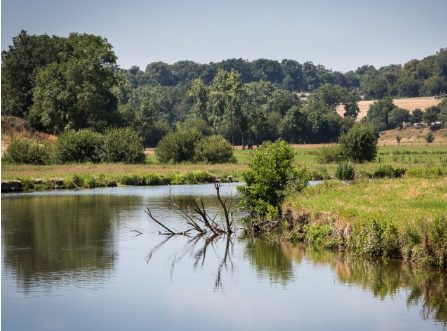
Picture the Pays de Retz in 1793 as a peninsula defended by water. To the north, the Loire. To the east, Lake Grand-Lieu and its marshes. And between them a modest river, the Acheneau, joining one to the other and crossed in very few places.
Port-Saint-Père is one of those places. The only one, in truth, carrying a road and a bridge on the way from Nantes to Pornic. Hold Port-Saint-Père and you hold the door to the whole country. The Republicans understood this at once: chroniclers of the war record that the village was reckoned "one of the keys of the country".
In twenty months, four armies would fight over a country bridge and a few hundred houses. By the end, almost nothing was left.
March 1793: the country rises
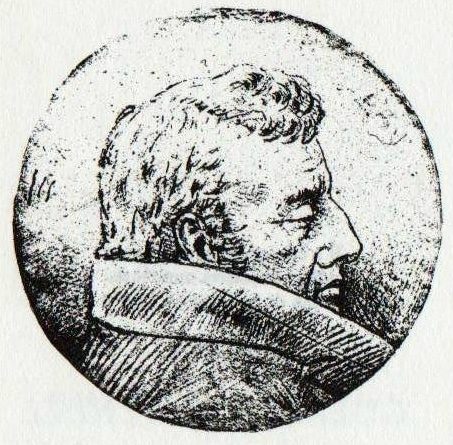
The insurrection broke out in the Pays de Retz in early March 1793, on news of the levy of three hundred thousand men. It found a leader nothing had marked out for the role: Louis-François Ripault de La Cathelinière, born in 1768 at the manor of La Mégerie, in Frossay. He was twenty-five.
He seized Port-Saint-Père within days. On 12 March he attacked Paimbœuf without success; on the 23rd he took part in the capture of Pornic, which ended in rout. Nominally under Charette's command, he would in practice fight almost independently, going so far as to style himself general of the Catholic and Royal Army of the Pays de Retz.
His way of war gave no quarter. On 24 March, at Bourgneuf-en-Retz, he had twelve patriots shot and himself killed the town's mayor, Pierre Mourain, with a pistol shot. Lucas de La Championnière, who served on that side, notes that at Legé, under Charette, executions of prisoners were rare, whereas at Port-Saint-Père La Cathelinière's men executed all of theirs. Yet the same officer writes of him that he "was perhaps not so cruel as has generally been believed", and that he never saw him attend an execution — but that his view "was that one must kill the patriots or make ready to be killed by them".
For six weeks the village stayed in insurgent hands. Then Nantes organised itself.
20 April 1793: the first engagement
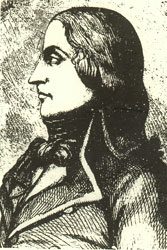
General Jean-Michel Beysser reached Nantes on 16 April. At dawn on the 20th he marched out on Port-Saint-Père with three thousand infantry, two hundred cavalry and eight guns, two of them twelve-pounders. The vanguard, five hundred strong, was led by Labory.
The odds were crushing. The Vendéen officer Pierre-Suzanne Lucas de La Championnière, whose memoirs remain the best royalist source, states that Pajot and Lapierre could gather only two hundred men to defend the village.
The bombardment began at eleven. The insurgents placed their eighteen-pounder on the high road and two more guns in the churchyard. They held on, hoping for Charette's reinforcements from Machecoul, three hours' march away.
Those reinforcements never came. Lucas de La Championnière never forgave it:
"Monsieur Charette could have come to the relief of Port-Saint-Père; had he sent word to Monsieur de la Cathelinière, his force would have swelled with every parish along the road and taken Beysser's army from the rear. […] Such a gathering, at least fifteen thousand strong, would infallibly have crushed Beysser, who had but three thousand. But Monsieur Charette would not leave Machecoul."
The Republican gunners were the better served. Pajot and Lapierre were wounded and had to withdraw; leaderless, the peasants scattered. After three and a half hours and at least two hundred and fifty rounds of artillery, Port-Saint-Père fell.
Beysser wrote to the department that his losses came to one man killed and six wounded. He had boats brought up from Nantes to build a bridge, stayed two days, and left on 22 April to take Machecoul.
12 May 1793: the counter-attack
Three weeks later the insurgents tried to retake the crossing. While the other commanders marched on Machecoul, La Cathelinière took Port-Saint-Père for his share.
Republican sources put the attackers at three to four thousand. The garrison numbered a hundred volunteers from the Manche and the Loire-Inférieure, and three hundred regulars.
Lucas de La Championnière's account gives the measure of that day:
"At the approach of the brigands the volunteers wished to abandon the place, but four hundred men of a German regiment swore to perish rather than withdraw without a fight. The attack was fierce, though the assailants were poorly armed; the resistance was equally stubborn, and at last the Vendéens entered the village despite three cannon defending the main approaches."
The other side left its own account of that day, in a dispatch giving markedly different figures:
"Yesterday brigands sought to seize the posts we held at Port-Saint-Père; but they were vigorously repulsed, with considerable loss. Our national guard and 250 men of the former Lamarck regiment performed prodigies of valour; our small force, only 280 foot and 40 horse, beat at least 2,000 brigands."
Two hundred and eighty men here, four hundred Germans there: the accounts never quite agree, and that is the rule of this war. What does hold across the sources is the ratio of one to seven or eight, and the stubbornness of a garrison that did not give way.
Entering the village was not holding it. The day ended in Republican victory: the attack was repulsed and the place held. The wider plan had not been carried through — once again, Charette had stayed at Legé.
10 September 1793: the Mainz troops
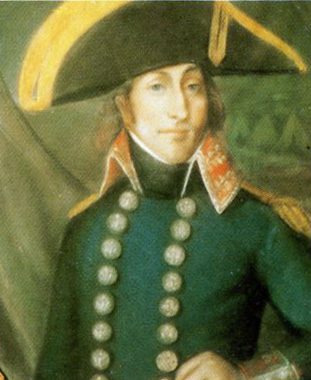
Summer changed everything. After the Vendéen failure before Nantes on 29 June, the Committee of Public Safety ordered General Canclaux to carry the war into the Lower Vendée using part of the Mainz garrison — professional, seasoned troops known simply as the Mayençais.
On 3 September, at Tours, Canclaux and Rossignol agreed a plan to catch the Vendéen armies in a pincer. On 8 September the vanguard left Nantes under Kléber. Beysser, commanding one of the columns, resolved to take Port-Saint-Père, held this time by La Cathelinière and Pajot.
He appeared before the place on 9 September. That day the Republicans fired there the first explosive shells yet seen in the Vendée. The detail matters: these projectiles, unknown to the peasants, spread terror through their ranks, and fear had them thinking of withdrawal. Lieutenant-Colonel Targe, of the Legion of the Francs, crossed the river with his sabre between his teeth.
The village fell on 10 September.
Nine days later, at Torfou, Charette and Lescure would inflict on those same Mainz troops their first major defeat. But Port-Saint-Père would stay Republican.
21-26 November 1793: the broken bridge
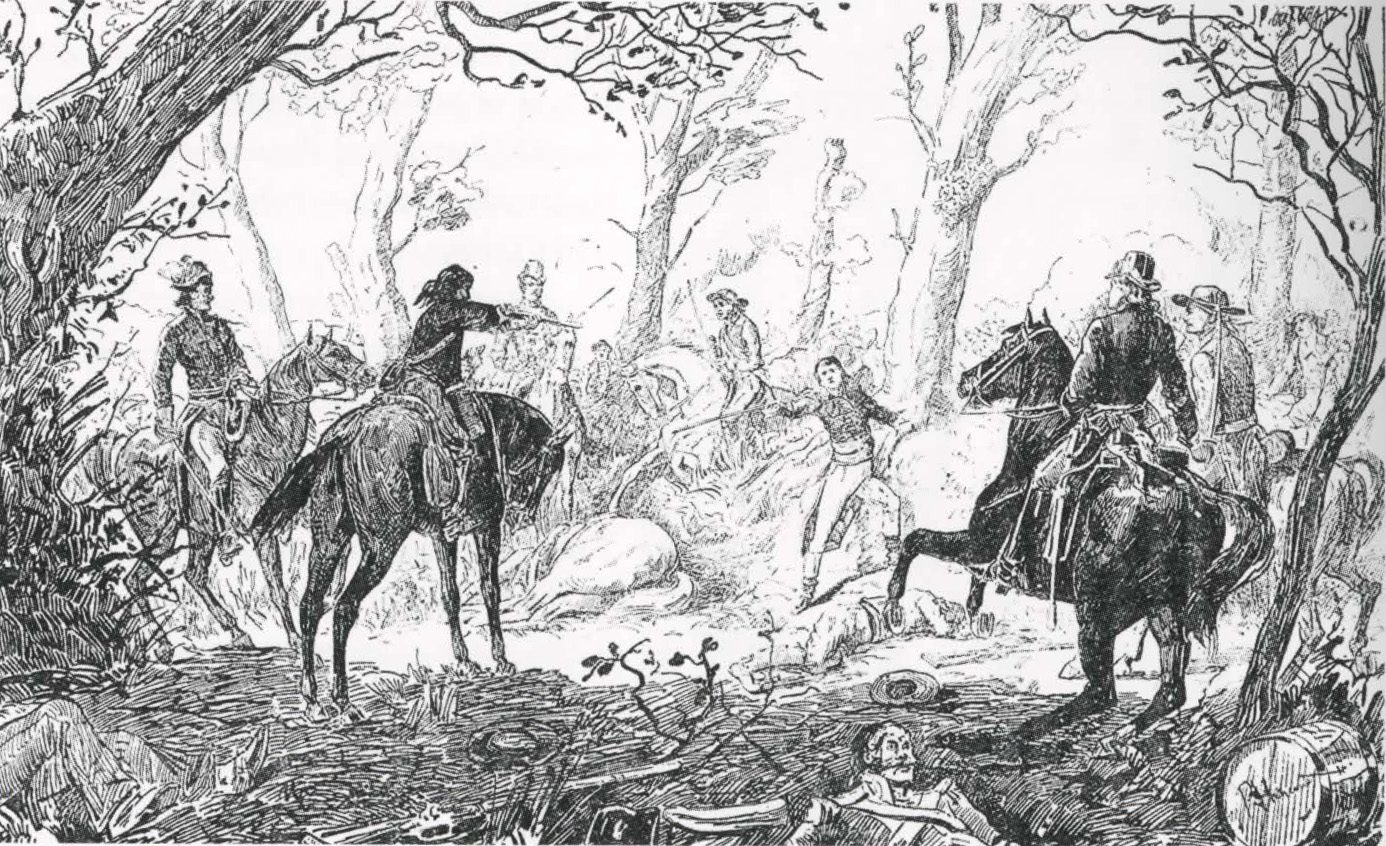
The fourth engagement was the longest, and the most revealing of what the war was becoming.
The bulk of both armies was then north of the Loire, caught up in the Virée de Galerne. On 2 November the council of war ordered General Nicolas Haxo to raise a corps of five to six thousand men to clear the Pays de Retz and retake Noirmoutier. Haxo left Nantes on 21 November and split his force into two columns.
Before Port-Saint-Père the Republicans found the bridge over the Acheneau cut. General Jordy set about restoring the crossing with joists, rubble from houses, and boats. On the 22nd he wrote to Nantes for more boats and planks to get his artillery across.
On the far bank the insurgents had hauled guns to the top of the village, including a thirty-six-pounder — a naval calibre, formidable for a peasant force. According to Savary, the Republicans dismounted it.
The figures, as so often, do not agree. Jordy claimed in his report to command three thousand men and put the insurgents facing him at seven to eight thousand. Lucas de La Championnière wrote on the contrary that La Cathelinière had left at Port-Saint-Père "only a weak guard". Both cannot be true.
The Republicans restored the bridge, took the first houses, then the whole village. According to Lucas de La Championnière, they burned every mill as far as Sainte-Pazanne.
Port-Boulay, Port-Brûlé
The Revolution had already renamed the commune: in the drive to de-Christianise place names, Port-Saint-Père had become Port-Boulay, after an administrator of the district of Paimbœuf.
But another name ran through the administrative papers. An article in the Nantes newspaper Le Petit Phare, in 1908, notes that a letter from the directory of Machecoul to the departmental administration refers to the village as Port-Brûlé — Burnt Port — after the fire that ravaged it in 1793 and left only three houses standing.
Three houses. That was what remained of a village four armies had fought over in eight months.
March 1794: the end of La Cathelinière
On 12 January 1794 General Haxo routed La Cathelinière's forces, which had taken refuge in the forest of Princé. The Vendéen leader was wounded by two gunshots.
His capture on 28 February was recounted by General Turreau himself in a letter to the representative Carrier, dated 11 Ventôse Year II. The document was printed at Nantes, and the account is worth quoting:
"The said Cathelinière, brigand chief and notorious for his murders, was taken yesterday in his cider-press house at Le Moulinet by troops of the cantonment. […] A detachment had gone out, and the volunteers were prowling around the house; they gave chase to a hen which took shelter under the press; reaching out to seize it, they found a blanket, and beneath it a brigand very poorly dressed, with a wide wound in his side. They told him that if he would declare where Cathelinière was, his life would be spared. He answered: it is I."
A second account, from the volunteers' side, completes the scene. The man chasing the hen seized the wounded prisoner by a leg and dragged him to the door: "You are the cause of my hen escaping; you shall pay for it with your life." The prisoner, long-bearded and "as dry as a piece of wood", answered: "Do not kill me; I am La Cathelinière!" The soldiers wanted to cut him to pieces; their commander stopped them, saying he must be taken to Nantes. He was put aboard a boat on the Loire.
Taken to Nantes, he was questioned by Turreau and the representatives on mission. He denied any part in the massacres at Machecoul. To the charge of having "fanaticised the people and put all to fire and sword for religion and for the king", he replied:
"You deserve the same reproach, since you sacrifice the people for liberty, which is nothing but a chimera."
He was condemned to death on 2 March 1794 and guillotined the same day. He was twenty-five.
And Briord, through those months
Briord is not a neighbour to these battles: it is part of them. The estate lies three kilometres from the village, within the commune of Port-Saint-Père. In 1793 the châtellenie of Briord comprised three seigneuries, among them Briord and Les Huguetières, in Port-Saint-Père. The bridge four armies fought over was the parish's own.
The master of the house, Joseph Charette, saw none of it. He died at Nantes on 17 October 1792, some months before the first shot, having been denounced by the parish priest Fortineau and sent home on grounds of health. The estate he had patiently held — its farms, its ponds, its vines — passed through the war without an owner.
It did not therefore stand aside. Placed under sequestration from its owner's death, Briord was closed by the agents of the district of Nantes, its goods inventoried, its household dispersed. His trusted man, René Souchu, was executed in the summer of 1793. The estate would remain sequestered for eight years, until its sale as national property.
The parish registers of Port-Saint-Père, held at the departmental archives, show for 1793-1795 a considerable excess of deaths, with peaks matching the typhus and dysentery epidemics that followed requisitions and troop movements. Several of the estate's tenant farmers are recorded missing. The farms yielded nothing. The ponds Joseph Charette had managed so carefully dried out in part, their sluices carried off by floods no one maintained.
As for the kinship: François-Athanase Charette de La Contrie, the man who did not come to the village's relief on 20 April, was a distant cousin of the Briord branch. The two families share a name, and a sympathy for the cause — but they are two distinct histories, and it will not do to confuse them.
What remains
The military sources consulted for this article — officers' memoirs, generals' reports, dispatches — never name Briord. Neither do they name the farms, the mills, the families. That is the nature of such documents: they count guns and dead, rarely people. One must turn to the parish registers and the sequestration files to recover what these months cost those who lived there.
Yet it is worth remembering that beneath these four dates, four times over, parishioners of Port-Saint-Père watched armies pass along their lanes, and that the village they lived in ended reduced to three houses.
None of this can be read in the landscape today. The river is quiet, the bridge is stone, and one crosses without a thought. Which may be the best reason to write it down.
Sources
Pierre-Suzanne Lucas de La Championnière, Mémoires d'un officier vendéen, 1793-1796 — Jean-Baptiste Kléber, Mémoires politiques et militaires, 1793-1794 — reports of Generals Beysser and Jordy — letter from General Turreau to Citizen Carrier, 11 Ventôse Year II — Le Petit Phare, Nantes, 1908 — Charles-Louis Chassin, La préparation de la guerre de Vendée and La Vendée patriote, documentary collections, 1892-1900 — Departmental Archives of Loire-Atlantique: series Q, national property and sequestration files; series E, Briord cartulary; parish registers of Port-Saint-Père — Société des historiens du Pays de Retz.