A short history of bees and honey.
At Briord there is a kingdom where wealth is measured neither in acres of land, nor in timber, nor in castle stone.
Here the queens are small, striped in yellow and black, and they spend their days working hard.
In the woods and meadows that surround the château de Briord, the bees have found a territory to their measure: trees, flowers, gardens, wild corners and a whole landscape to explore.
And when the sun comes up, the kingdom wakes.
Bzzz…🐝🐝🐝 The day begins.
THE BEES' TERRITORY
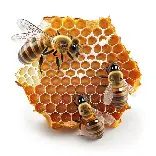
In a colony of bees there is normally only one queen. Her main task is to lay the eggs that allow the colony to renew its generations.
She can lay a great many over her lifetime, especially when the colony is in full swing in spring and summer. But be careful: the queen is not the "boss" of the hive in the way we humans would understand it.
She does not gather her workers around a big table to announce:
— Today, ladies, we shall be foraging the garden flowers. No, no, no!
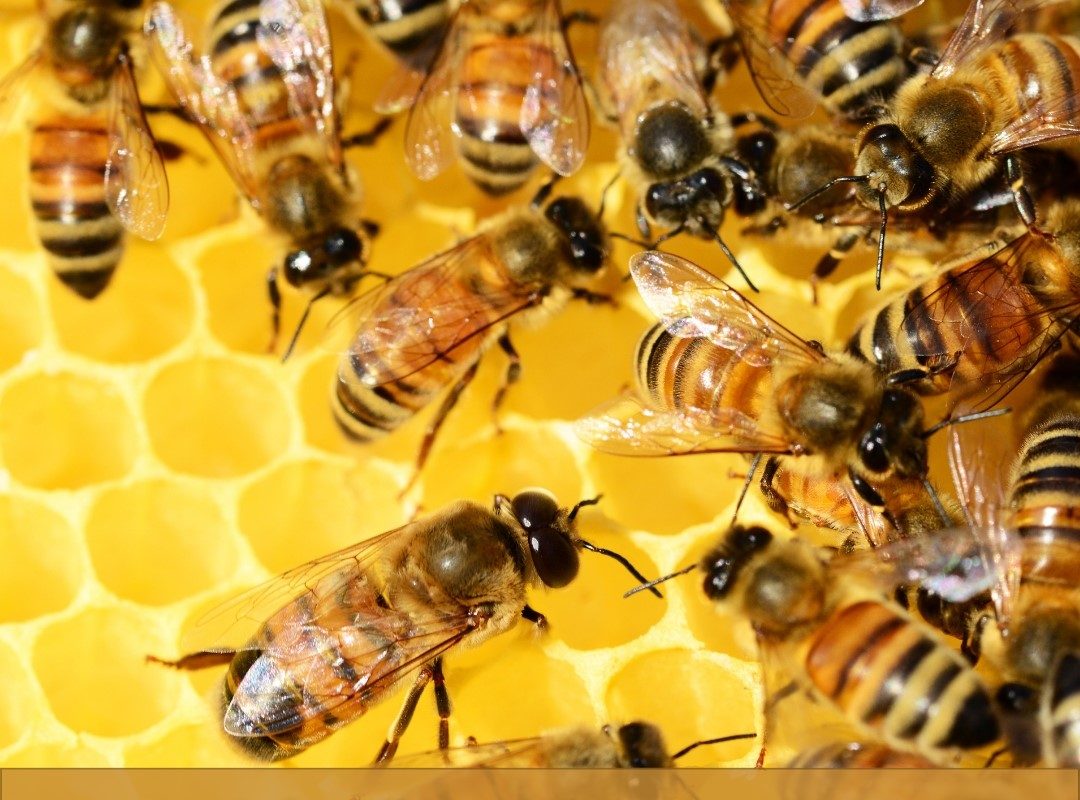
EVERY ONE HAS HER OWN WORK
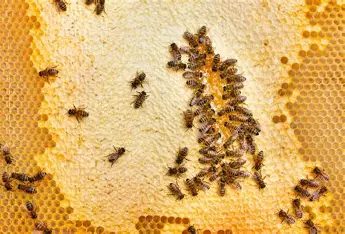
Among bees, everyone knows her job. And that is precisely what makes their organisation so extraordinary. The queen lays. The workers work.
The males, called drones, exist chiefly to mate with a young queen.
One might almost say the hive is a society in which nobody asks:
— And what am I doing today?
Everyone already knows.
THE LITTLE WORKERS OF BRIORD
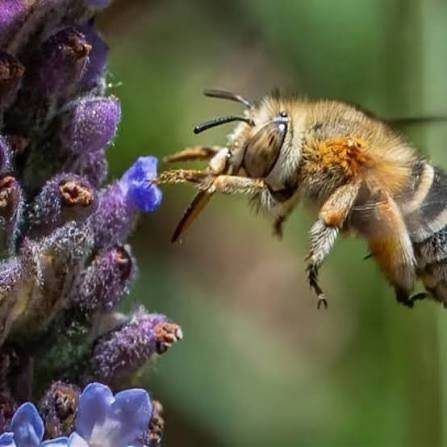
The workers are females, but they generally do not reproduce. Their timetable is rather full. As they age, they change trades. When young, they work inside the hive. They clean the cells, feed the larvae, tend the brood, make wax, build the combs and help ventilate the hive.
Then, as they grow older, they become guards. They watch the entrance: there is no question of letting just anyone in! Finally they become foragers. And there the real adventure begins. They leave the hive, range over the surrounding country and visit the flowers in search of nectar and pollen. A bee may travel several kilometres around her hive to find what the colony needs. Then she comes home with her precious cargo.
The pollen serves above all to feed the young bees. The nectar is going to become honey.
Bzzz….🐝🐝🐝 And that is where an astonishing transformation begins.
How does a flower become honey?
It all starts with a flower. The bee draws the nectar from it with her long tongue and carries it in a special pouch inside her body: the crop.
But nectar is not yet honey. It is far more liquid. Back in the hive, the bee passes the nectar to other workers. They transform it little by little with their enzymes and through an astonishing piece of collective work. Then they place the nectar in the wax cells. But the work is not over.
Much of the water must now be removed. The bees ventilate the hive by beating their wings. The water evaporates gradually and the nectar thickens. When the honey is ripe enough, the bees seal the cell with a fine film of wax. This is called the capping. The store is ready.
It is a very important store, because bees do not make honey to please human beings. They make it for themselves.
It is their larder.
A hive is a small town
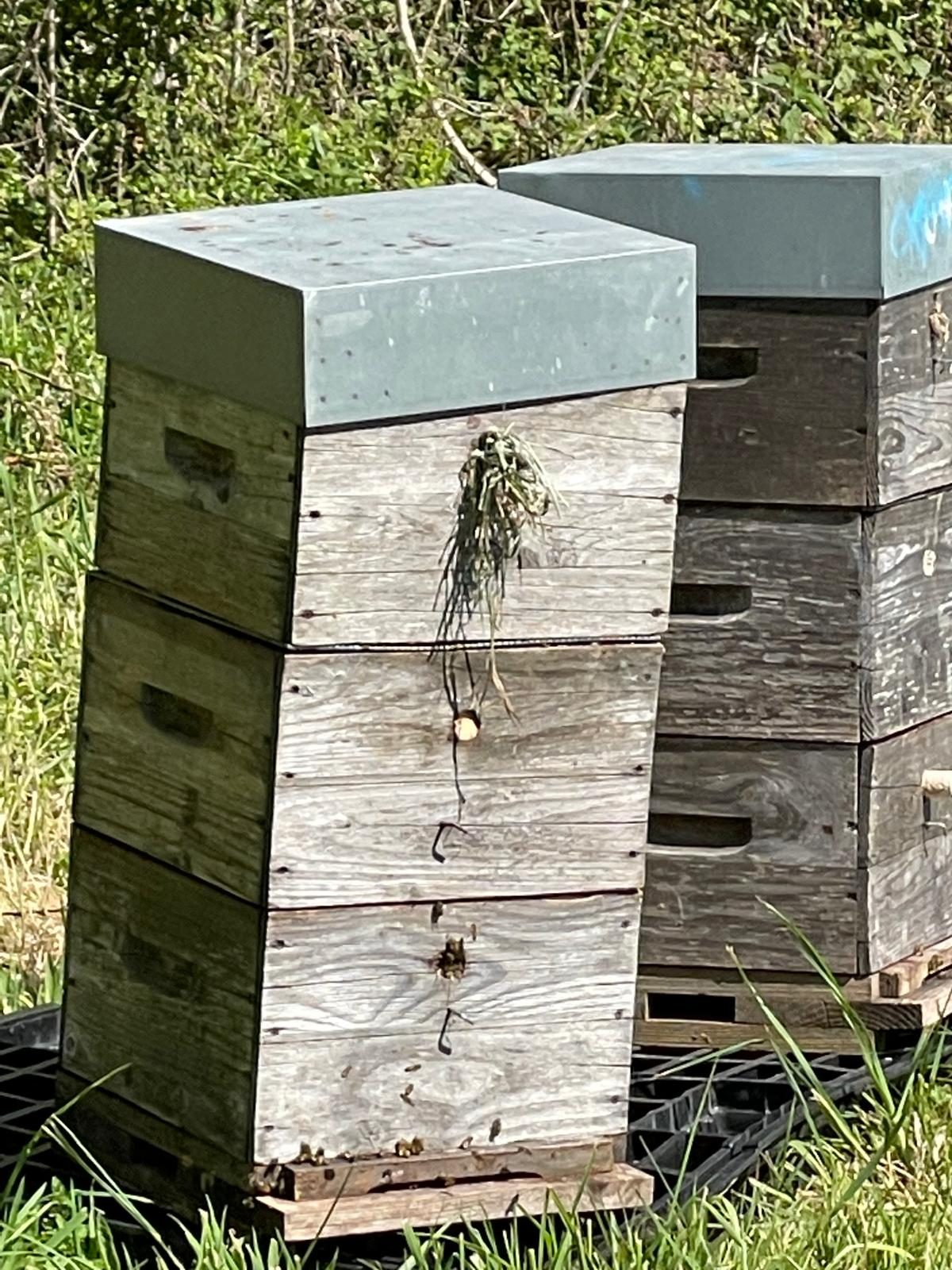
Picture the hive as an exceedingly well-run town. At the centre lies the brood, that is, the place where the bees of the future grow. All around, the workers arrange the stores of pollen and honey. The combs are made up of a multitude of six-sided wax cells.
Why hexagons?
Because that shape allows an enormous amount to be stored while using very little wax. Bees are therefore builders, architects, nurses, guards, ventilators, storekeepers and foragers all at once. And they do all this without a computer, without a telephone and without a single Teams meeting.
And what of the queen in all this?
The queen has another particularity: she communicates with the colony through chemical substances called pheromones. Her scent helps hold the colony together. When the queen is present and in good health, the bees know it. When she disappears, the hive knows that too.
The workers can then raise a new queen from a young larva by feeding it a special food. The new queen will leave her cell, make her nuptial flight and return to the colony.
A new story will begin.
Bzzz….🐝
How long has man kept bees?
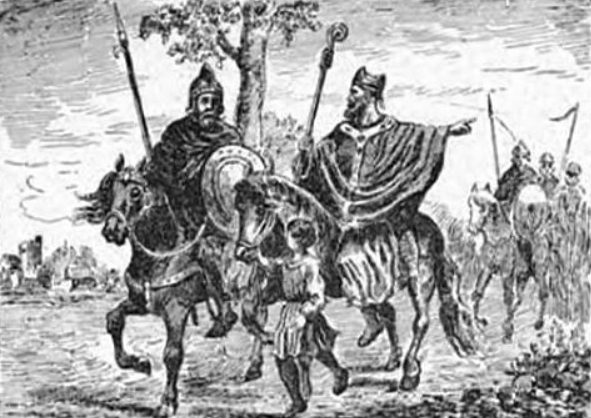
Long before the château de Briord was built!
Human beings have gathered honey since antiquity, thousands of years before our own time. For a long while they merely sought out wild swarms and took their honey. Little by little they learned to settle bees in hives so as to keep them.
In the eighteenth century, when Joseph Charette de Briord had the present château built in 1770, beekeeping had therefore existed for centuries already. But it was still very different from what it is today.
Hives were then made of straw, wicker, wood or hollowed-out trunks. To harvest the honey, the beekeeper often had to take out the wax combs, badly disturbing the colony or even destroying it. The harvest was thus far more brutal than it is now.
In those days honey was precious. Sugar was still costly and uncommon. Honey was used to sweeten food, to prepare drinks, to preserve certain goods and to make remedies.
Wax, too, was of great value. It served in particular to make candles and church tapers. In a house like Briord it was indispensable for lighting the rooms and the places of worship.
A hive therefore yielded two treasures: honey for the table and wax for the light.
In the eighteenth century, scholars such as Réaumur studied bees and their organisation. Man began to understand more clearly that the hive forms a genuine society, ordered around the queen, the workers and the brood. Then, in the nineteenth century, beekeeping underwent a real revolution. Movable-frame hives at last made it possible to remove the honeycombs without destroying the colony.
In France, Charles Dadant, born in 1817, helped to develop modern beekeeping. The Dadant hive would go on to become one of the most widely used designs. The beekeeper no longer merely harvests the honey: he observes, tends, protects and accompanies the colony.
From the traditional hive to the modern one, beekeeping has thus moved, over the centuries, from the simple gathering of honey to the true husbandry of bees.
The beekeeper: the one who works with the bees
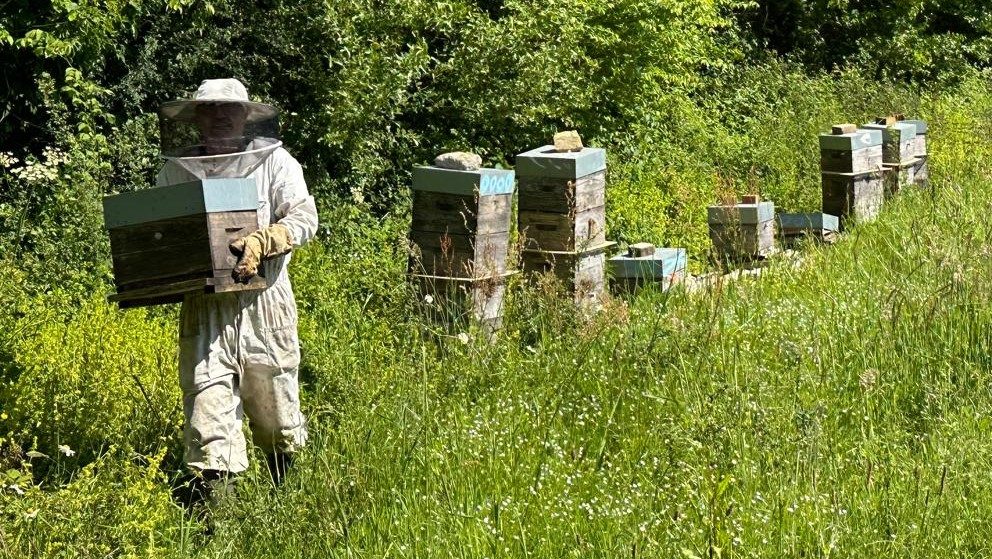
Today the beekeeper of Briord comes to the hive with a good deal more than a basket. He needs know-how, patience and a fair measure of courage. He watches the colonies through the seasons. In spring he follows their growth.
When the flowers appear, the bees work at full speed. Once summer comes, the hives may fill with honey.
But the beekeeper must also make sure the bees have enough stores for themselves.
For a hive is not a supermarket whose shelves one can empty without wondering how the customers are to have dinner the next day.
The harvest must therefore be taken at the right moment, and with care.
And when the time comes to harvest?
The beekeeper begins by removing the frames holding honey that has come to maturity. The wax cappings are then taken off. The frames go into an extractor. Centrifugal force draws the honey out of the cells and it runs down to the bottom of the machine. It is then filtered, left to settle, and put into jars. That is how the nectar of flowers becomes the honey you can find in the little shop at the château.
A few days earlier it was still in a flower. A few hours later it was in a hive.
Now it may well be on your slice of bread 😊
Bees really do have a remarkable head for logistics.
At Briord this story does not stop at the honey jar. The honey produced by the bees of the estate may also take another road: that of the kitchen at the restaurant.
At La Table de Briord, it may find its way into certain dishes and bring to the plate a small part of the landscape that surrounds the château.
It makes a fine circle: the woods feed the flowers, the flowers feed the bees, the bees make the honey, the beekeeper gathers it, and the kitchen gives it a new life.
So when you taste the honey, you are tasting a little piece of the land of Briord.
A message from the queen bee of Briord
— I am the Queen of the bees, and I need you!
To protect my kingdom, here are a few simple things you can do. Let your gardens flower! Plant lavender, thyme, rosemary, sage, borage, clover or fruit trees. Every flower gives us nectar and pollen.
Say no to pesticides!
Choose natural methods instead: mulching, hand weeding, and helpers such as ladybirds. And above all, avoid treatments while the flowers are out!
Make us places to shelter!
Leave a few patches of bare soil, some wood, some hollow stems, or set up a small insect hotel. A strip of wild flowers is quite enough to delight us, too.
Every flower counts, every gesture counts. Let us protect the bees together!
The queens of Briord
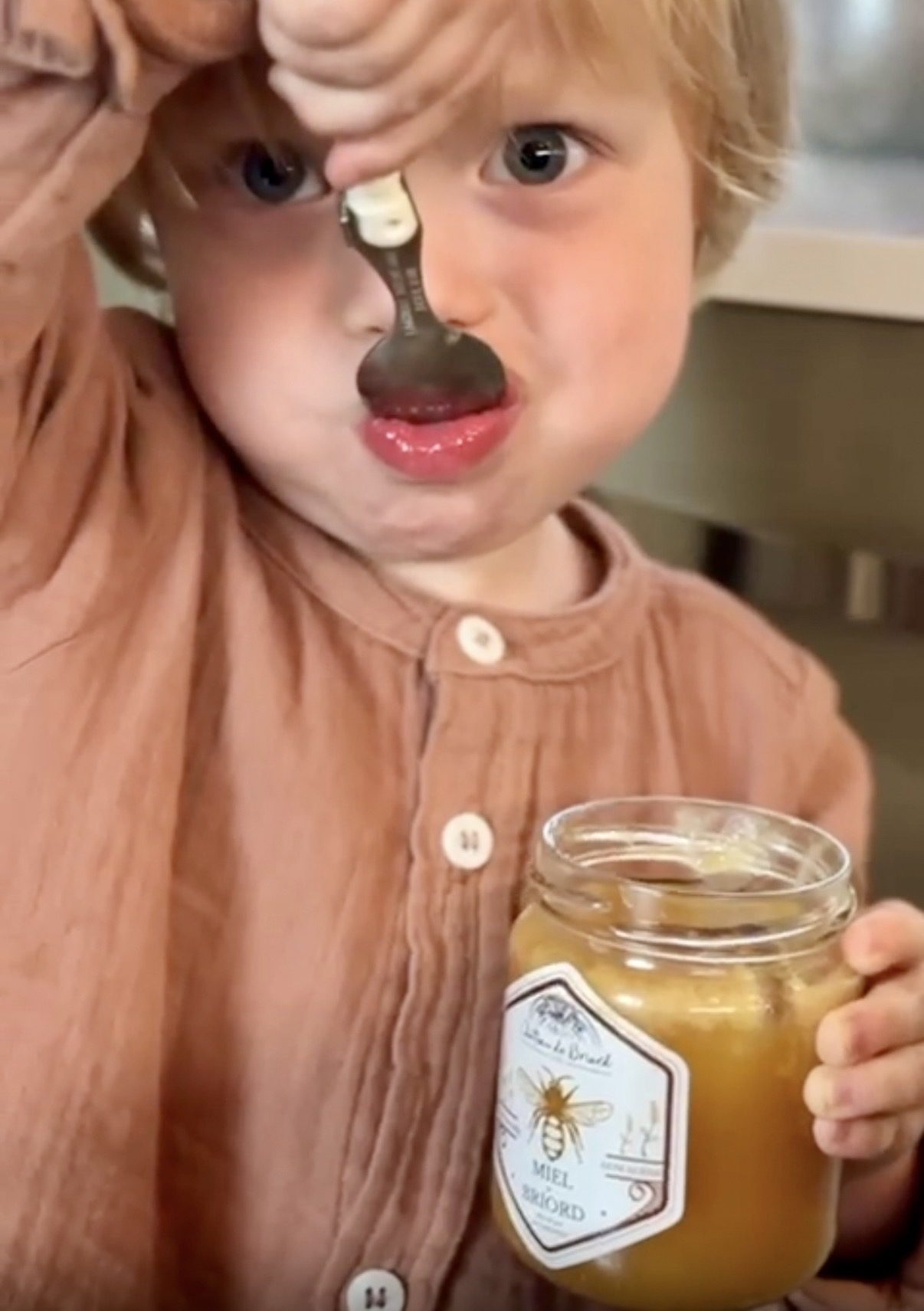
From the traditional hives of centuries past to the hives of today, the history of beekeeping tells in the end of a long adventure between man and nature. At Briord that history has a setting of its own. A château built in the eighteenth century. Lands shaped by eight centuries of history.
Woods and gardens.
And today, bees carrying on their work as though they had always been here.
In a few days, perhaps, someone will push open the door of the little shop at the château, or of the restaurant « La Table de Briord ».
They will buy a jar, or order a dessert. Most likely without knowing all the work hidden behind that small quantity of honey.
There is the woodland. Hundreds of flowers. Thousands of bees. Hours of flight. Wax. Nectar. Sun. Wind. A whole small society which, for centuries, has known a secret that human beings are still trying to understand:
To do great things, you sometimes have to begin by being very small.
Bzzz…🐝