City architect and surveyor (architecte-voyer) of Nantes from 1760 to 1780, Jean-Baptiste Ceineray (1722-1811) transformed the walled city into a neo-classical town open to its river. A major figure of eighteenth-century Nantes urbanism.
Origins and training
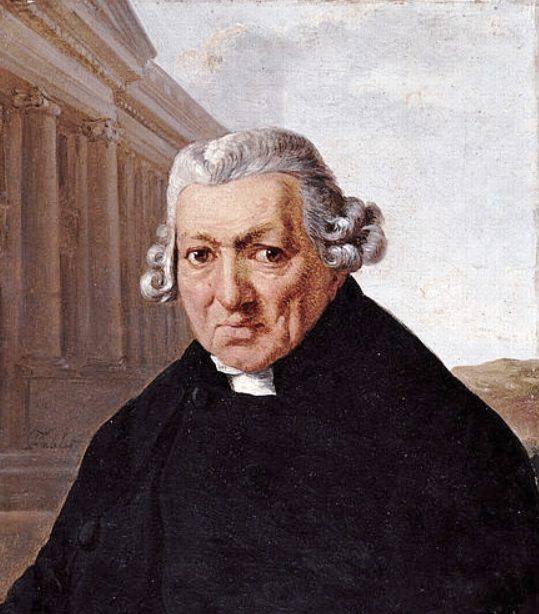
Born in Paris on 10 March 1722, Jean-Baptiste Ceineray was the son of François Ceineray, a master carpenter. He trained first under the architect Franque, in his Parisian office, before being admitted in 1743 to the Royal Academy of Architecture. At the end of his training, he stayed in Italy where he studied the great achievements of ancient and classical architecture, a lasting imprint on his taste for a sobriety inspired by Greece.
Settling in Nantes
In 1752, Ceineray settled in Nantes to make his career there. On 7 May 1754, he married Marie Sauvaget, daughter of François Sauvaget de La Gaudinière, lieutenant of the bourgeois militia. From this union was born in 1755 a son, Jean-Marie; Marie Sauvaget died as early as 1756, at the age of thirty.
The great urban plan
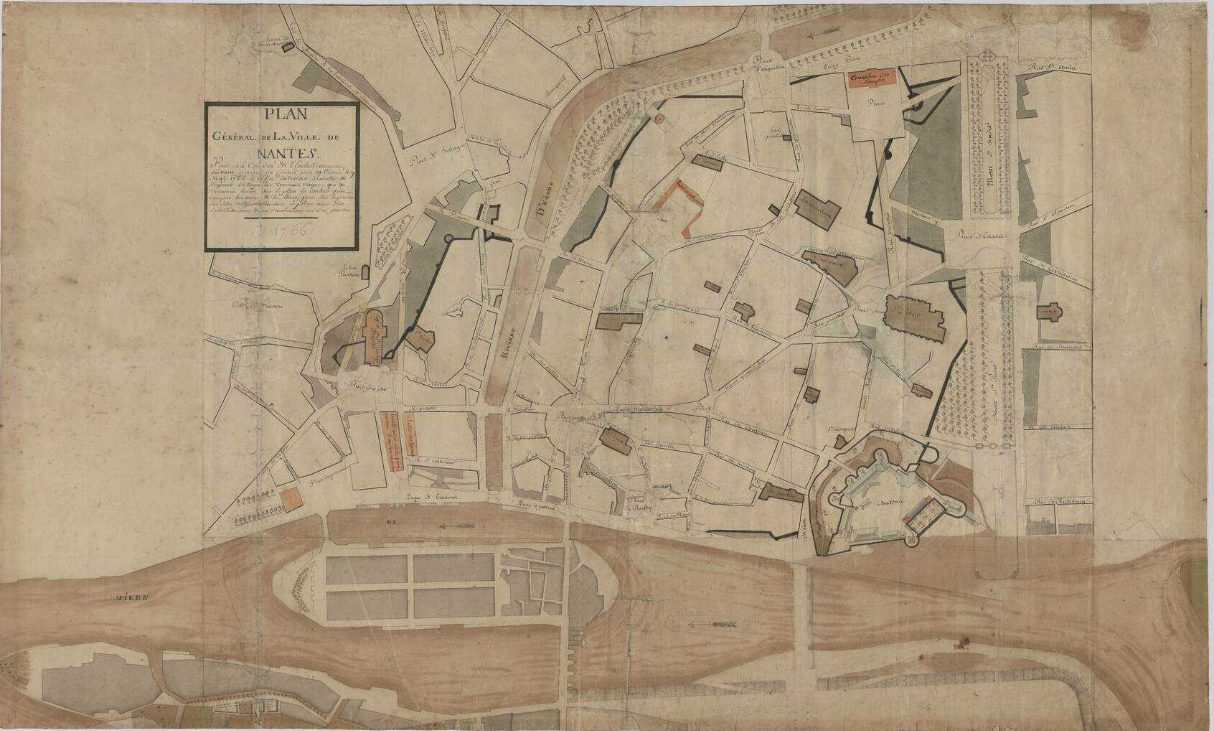
Appointed city architect and surveyor, Ceineray designed from 1760 a vast programme of urban redevelopment. He had the ramparts demolished, traced wide straight thoroughfares in place of the winding medieval streets, opened up new vistas behind the cathedral, and rearranged streets and squares. His plan imposed a new architectural discipline, notably symmetry and a regular elevation of façades. His work would be continued by his pupil Mathurin Crucy, who would take up and adapt his plans, in particular for the Graslin district.
Principal works
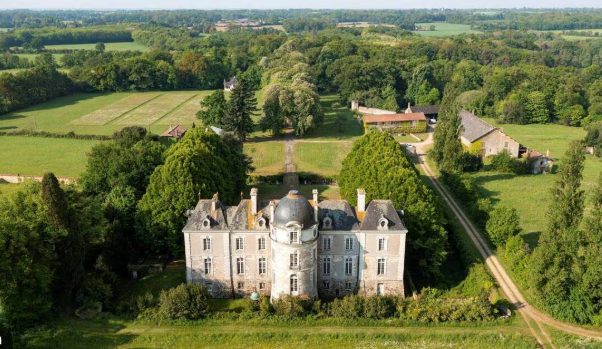
To him we owe the building of the Chamber of Accounts of Brittany (1762-1781), today the prefecture of Loire-Atlantique and regarded as his masterpiece; the town-houses of the Cours Saint-André, the Hôtel Deurbroucq on the quay of the Île Gloriette and the Hôtel de la Division Militaire; the ordered buildings around the Bouffay (Quais Brancas, Flesselles, Port-Maillard); as well as folies and châteaux of the surroundings, such as the manor of La Gibraye at Saint-Sébastien and the château of La Picauderie at Thouaré-sur-Loire (1773).
End of life
Reputedly disinterested and lavish, Ceineray neglected his fortune. He died in poverty on 29 June 1811, in a house on the Rue de la Fosse that he had himself built; his death certificate describes him as a "pensioner of the State". Long after his death, the city would pay tribute to his work by giving his name to the quay that runs along the façade of the former Chamber of Accounts, on the bank of the Erdre.
Sources
Ville de Nantes, Nantes Patrimonia, entry "Jean-Baptiste Ceineray". — Hélène Rousteau-Chambon, "La Chambre des comptes de Jean-Baptiste Ceineray", Annales de Bretagne et des Pays de l'Ouest, vol. 108, no. 4, 2001. — Catherine Chabot Barres, Recherches sur l'architecte Jean-Baptiste Ceineray (1722-1811), dissertation, Paris IV, 1992. — Bernard Le Nail, Dictionnaire biographique de Nantes et de Loire-Atlantique, Le Temps éditeur, 2010, p. 86-87. — Jean-Charles Renoul, "Ceineray", Annales de la Société Académique de Nantes, vol. 32, 1861, p. 451-490.