Sultan of the Ottoman Empire at its height, contemporary and ally of Francis I. A figure of the vast world that, in the sixteenth century, surrounded the small seigneury of Briord.
He never heard of Briord, and Briord never saw him. Yet Suleiman the Magnificent belongs to the horizon of an age — that sixteenth century when the estate passed from the L'Épervier family to the Rouxières, while far away empires clashed.
The greatest of sultans
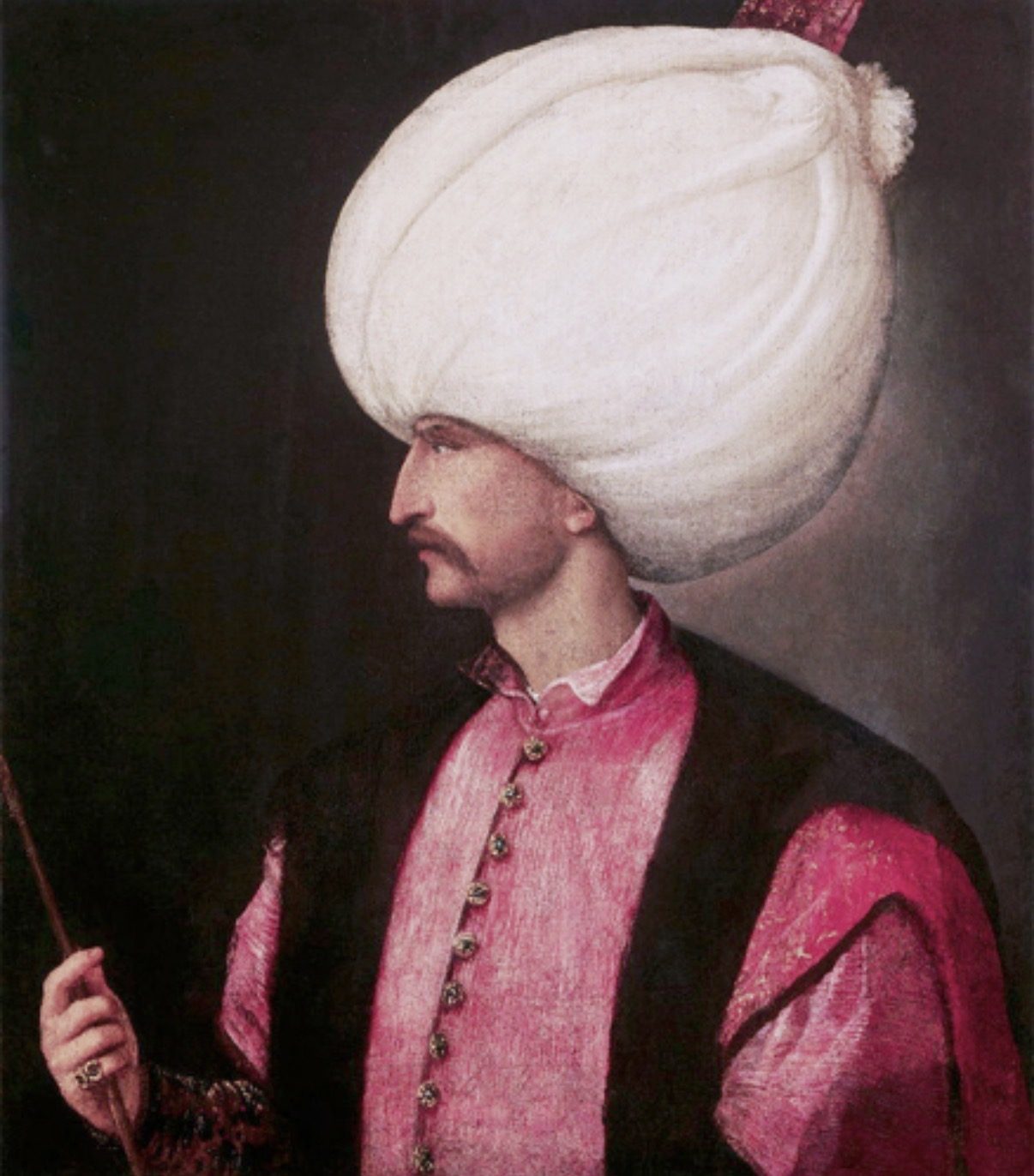
Born around 1494, Suleiman I, whom Westerners called "the Magnificent" and the Ottomans "the Lawgiver", reigned from 1520 to 1566. Under him, the Ottoman Empire reached its apogee: from Budapest to Baghdad, from the Red Sea to the gates of Vienna, he ruled an immense territory and a refined civilisation.
The ally of Francis I
What links Suleiman to the world of Briord is his alliance with the King of France, which — beyond politics — took the form of a gift at once extraordinarily simple and extraordinarily touching.
In thanks for his coming, Suleiman the Magnificent had a plant offered to the ambassador of Francis I, who hastened to entrust it to his wife, the Queen of France, of whom history relates that she had "green fingers".
She indeed grew passionate about this exotic plant, acclimatised it to our climates, and thus created a new fruit variety in the West.
This plant was a plum tree which, as you will have guessed, was named the "Reine Claude" (the greengage).
On the Land of Briord, a favoured hunting ground of her grandfather Francis II, Duke of Brittany, and of his treasurer and owner Pierre Landais, it was only natural to keep alive the story of Queen Claude. Thus, at the centre of the great conservatory kitchen garden of Briord, twelve Reine Claude plum trees of four historic varieties were planted.
Of course, the relationship between Francis I and Suleiman I did not rest on these agronomic matters alone.
Faced with the power of Charles V, Francis I concluded with the sultan a resounding diplomatic and military alliance that scandalised Christendom. The two sovereigns — one Most Christian, the other Commander of the Faithful — joined forces against a common enemy.
The vast world around Briord
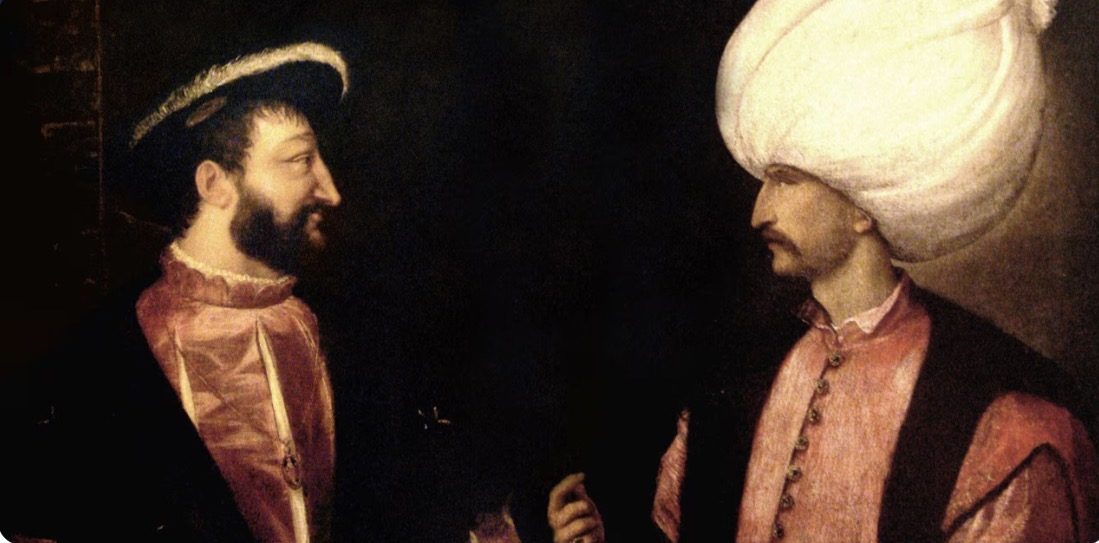
To evoke Suleiman in connection with Briord is to recall that the modest seigneury of the Pays de Retz existed within a world in full expansion, where the kings of France conversed with sultans, where America was being discovered, and where Europe was tearing itself apart over religion.
Suleiman died in 1566, the very year Briord changed hands once more. Two scales of one same century.